


Care and Cleaning Guide
Lab-grown diamond jewelry can lose some of its brilliance over time as oils, lotions, cosmetics, dust and everyday residue collect on the diamond and setting. Fortunately, proper cleaning can restore much of that sparkle without complicated equipment. The safest approach is usually gentle cleaning with mild soap, lukewarm water, a soft brush and careful drying. Regular care also helps protect the setting, metal and overall appearance of the piece. The guide below explains how to clean lab grown diamond jewelry safely at home and when professional attention may be better. HVJ Diamonds offers jewelry designed to keep its brilliance with routine care.
Can You Clean Lab-Grown Diamonds at Home?
Yes. Most lab-grown diamond jewelry can be cleaned at home using gentle methods. However, always consider the metal, setting and any additional gemstones before cleaning, since these components may require extra care. The same gentle approach works across diamond necklaces, lab-grown diamond earrings and luxury rings.
What Is the Best Way to Clean Lab-Grown Diamond Jewelry?
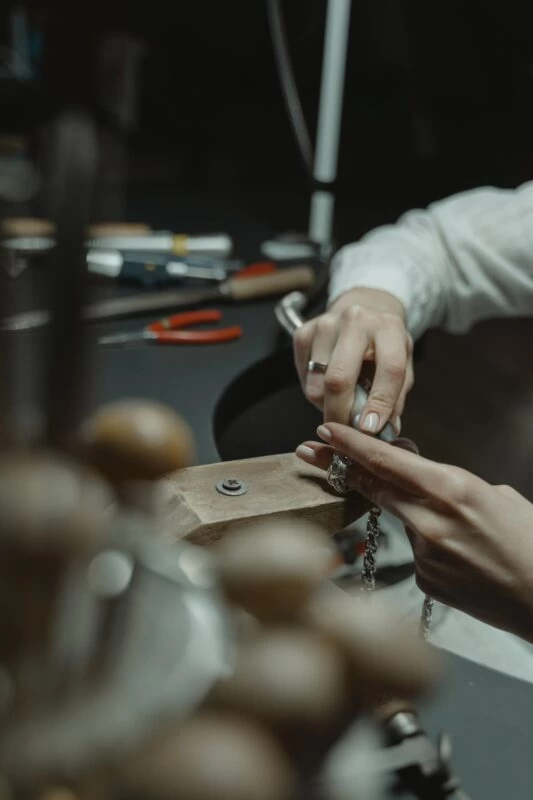
The best way to clean lab grown diamond jewelry is to remove oils and dirt without using aggressive chemicals or abrasive materials.
What You Will Need
Prepare lukewarm water, mild dish soap, a soft-bristled toothbrush or jewelry brush and a clean microfiber or lint-free cloth.
Step 1: Prepare a Gentle Cleaning Solution
Mix a small amount of mild dish soap with lukewarm water. Avoid very hot water and strong household cleaning products.
Step 2: Soak the Jewelry
Place the jewelry in the solution briefly to loosen residue around the diamond and setting.
Step 3: Gently Brush Away Dirt
Use a soft brush to clean around the diamond, underneath the setting and between small details where residue tends to collect.
Step 4: Rinse Thoroughly
Rinse carefully with clean water to remove soap. Use a bowl or closed drain to reduce the risk of losing the jewelry.
Step 5: Dry and Polish
Pat the piece dry with a lint-free cloth, then gently polish the metal and diamond surface.
Explore HVJ Diamonds Lab-Grown Jewelry
How to Clean Lab-Grown Diamond Jewelry Without Damaging It
The diamond itself is highly durable, but the metal and setting can still be damaged by poor cleaning habits.
Avoid Harsh Chemicals and Abrasive Cleaners
Bleach, chlorine, aggressive household cleaners and abrasive products should not be used for routine cleaning.
Do Not Use Rough Materials
Avoid paper towels, hard brushes and rough fabrics that may scratch polished metal surfaces.
Be Careful With Loose or Delicate Settings
If a stone moves, a prong looks damaged, or the setting is unusually delicate, stop cleaning and have the piece inspected professionally.
Avoid Extreme Temperatures
Sudden temperature changes are unnecessary and may create additional risk for certain settings or materials.
How to Care for Lab-Grown Diamonds and Keep Them Sparkling
Knowing how to care for lab grown diamonds between cleanings helps reduce residue, scratches and unnecessary wear. If you are still choosing a piece, our guides to Why Choose Lab Grown Diamond Necklaces and Types of Diamond Necklaces cover the main options.
Remove Jewelry Before Applying Lotions and Beauty Products
Apply creams, cosmetics, hairspray and similar products before putting on your jewelry to reduce surface buildup.
Take Off Jewelry During Physical Activities
Remove pieces before exercising, gardening, cleaning, or other activities where they may encounter impact, dirt, or chemicals.
Keep Jewelry Away From Household Chemicals
Household cleaning products can affect metals and other jewelry components even when the diamond itself remains unaffected.
Store Each Piece Separately
Keep jewelry in separate soft-lined compartments or pouches to reduce contact and scratching.
Inspect the Setting Regularly
Check prongs, clasps and settings periodically so potential problems can be identified before a stone becomes loose.
How Often Should You Clean Lab-Grown Diamond Jewelry?
Cleaning frequency depends on wear. Pieces worn daily may benefit from gentle cleaning every few weeks, especially if exposed to lotions and cosmetics. Jewelry worn occasionally may require less frequent attention. Professional cleaning and inspection can be scheduled periodically depending on the piece and its condition.
When Should You Have Lab-Grown Diamond Jewelry Professionally Cleaned?
Professional cleaning is preferable when you notice loose stones, damaged prongs, significant buildup, intricate settings, or changes in the jewelry that cannot be addressed safely at home. It is also useful if the piece has not been inspected for a long time.
Can You Use an Ultrasonic Cleaner on Lab-Grown Diamond Jewelry?
Not always. Lab-grown diamonds are durable, but ultrasonic cleaning may not be appropriate for every setting, mounting, inclusion, treatment, or accompanying gemstone. Ask a qualified jeweler before using an ultrasonic cleaner.
How to Restore the Sparkle of Lab-Grown Diamond Jewelry
Dullness often comes from surface residue rather than the diamond itself. Removing buildup can significantly improve appearance.
Clean Away Oil and Residue
Wash away lotions, skin oils, dust and cosmetics using the gentle soap-and-water method.
Check the Setting for Buildup
Residue underneath or around the diamond can reduce visible brilliance even when the top surface looks clean. A bezel design such as the Bezel Lab-Grown Diamond Chain Necklace is easier to wipe clean, while halo and drop designs such as the Heart Shape Halo Lab-Grown Diamond Pendant and the Elongated Drop Lab-Grown Diamond Necklace need more attention around the setting.
Polish the Metal Carefully
Use a soft cloth to restore surface shine without introducing scratches.
Consider Professional Cleaning and Inspection
Persistent dullness may relate to the metal, setting, scratches, or another component rather than the diamond.
FIND Lab-Grown Diamond Jewelry
Lab-Grown Diamond Jewelry Cleaning Mistakes to Avoid
Using Strong Household Cleaners
Strong chemicals may damage metals, finishes, or other jewelry components.
Scrubbing With Hard or Abrasive Brushes
Hard brushes can scratch metal and delicate surfaces.
Cleaning Over an Open Drain
Always close the drain or use a separate bowl before rinsing jewelry.
Ignoring Loose Stones or Damaged Prongs
Cleaning a damaged setting may make an existing problem worse.
Storing Jewelry Without Protection
Separate storage reduces scratches and contact between pieces.
FAQs About Cleaning and Caring for Lab-Grown Diamond Jewelry
How do you clean lab-grown diamond jewelry at home?
Use lukewarm water, mild dish soap, a soft brush and a lint-free cloth.
What is the best way to clean a lab-grown diamond?
Gentle soap-and-water cleaning is usually suitable for everyday buildup.
Can I use dish soap to clean lab-grown diamond jewelry?
Yes, provided it is mild and does not contain aggressive cleaning agents.
Can I use an ultrasonic cleaner on lab-grown diamonds?
Sometimes, but only if the setting and other components are suitable. Ask a jeweler first.
How often should I clean lab-grown diamond jewelry?
Clean it when residue becomes visible or brilliance noticeably decreases.
How do I keep my lab-grown diamond sparkling?
Limit exposure to lotions, chemicals, dirt and impacts and clean it regularly.
Can lab-grown diamonds get cloudy?
Surface buildup can make them appear cloudy, while cleaning often restores their appearance.
Can I wear lab-grown diamond jewelry every day?
Yes, but regular care, careful storage and occasional inspection help protect the setting and finish.