

How Each Setting Holds, Frames and Shows Off a Diamond
Diamond earring settings determine how a diamond is held in place and influence the finished look, profile and fit. Some terms, such as prong and bezel, describe how the diamond is secured. Others, including martini and basket, describe the structure or profile supporting the stone. Halo refers to an arrangement of smaller diamonds around a center stone. Understanding these diamond earring settings makes it easier to compare visibility, protection, comfort and style.
TL;DR
- Prong settings: Leave more of the diamond exposed for an open look.
- Bezel settings: Surround the diamond with a metal rim for a clean outline and added edge protection.
- Martini and basket settings: Differ mainly in profile and supporting structure.
- Halo settings: Add smaller surrounding diamonds for greater visual presence.
- Drop earrings: Can use several setting types within a hanging design.
What Are Diamond Earring Settings?
A diamond earring setting is the metal structure that secures the diamond within the earring. Metal coverage affects how much of the stone remains visible.
Setting design can also influence profile, comfort and how closely the earring sits against the ear. A stud, hoop, or drop describes the broader silhouette, while prong, bezel, martini, basket, or halo describes how the diamond is supported or arranged within that design.
Explore Diamond Earrings at HVJ Diamonds
Types of Diamond Earring Settings
The main diamond earring settings styles differ in metal coverage, structure and appearance.
Prong Settings
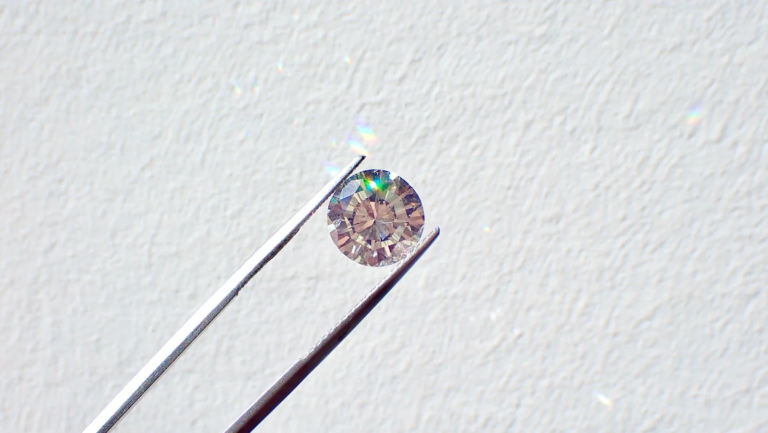
Prong settings use small metal claws to hold the diamond securely while leaving much of its surface exposed. This creates an open appearance.
The number and arrangement of prongs vary by design. Prongs should be checked periodically for wear or looseness.
Bezel Settings
A bezel setting surrounds the diamond’s perimeter with a metal rim. This gives the stone a clean, defined outline while adding protection around its edges.
Compared with prongs, a bezel introduces more visible metal. The amount of stone that remains visible depends on the specific construction. The bezel-set lab-grown diamond stud earrings show this style clearly.
Martini Settings
Martini settings have a tapered, cone-like profile commonly associated with three-sided diamond stud settings. The structure narrows toward the earring post, giving the setting a compact shape.
Comfort depends on ear anatomy, diamond size and earring dimensions.
Basket Settings
Basket settings support the diamond with a framework beneath the stone, often combined with prongs. Their shape is generally broader and more structured than the tapered profile of a martini setting.
Basket height and construction affect the earring’s profile.
Halo Settings
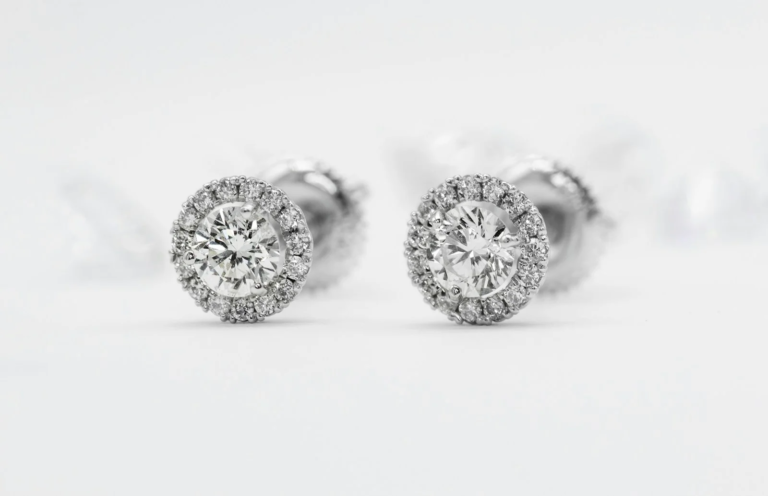
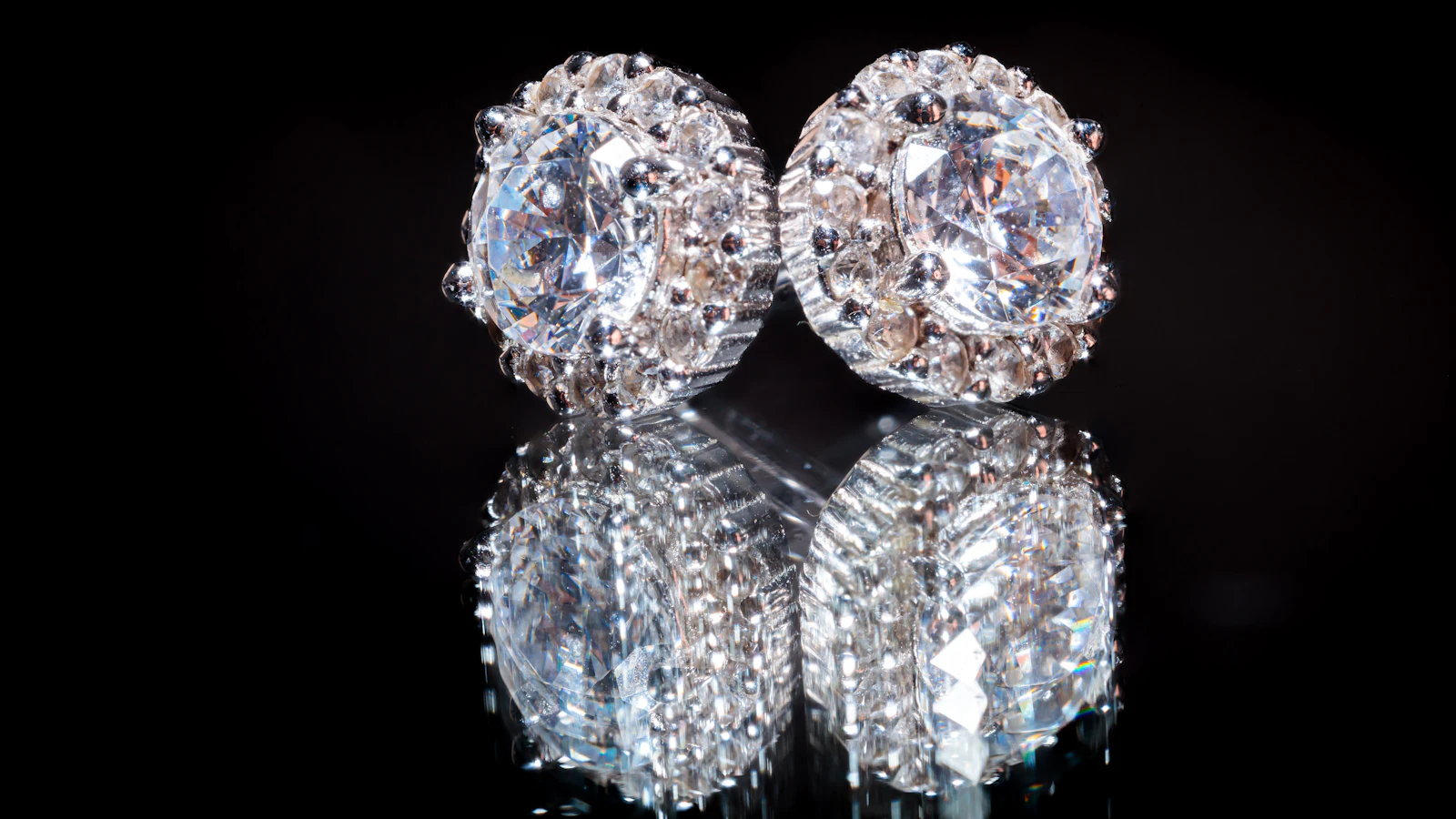
Halo settings place smaller diamonds around a center diamond, creating a larger-looking design.
Halo refers to the diamond arrangement rather than one specific retaining mechanism. The center stone may still use prongs or another setting type. Halo lab-grown diamond stud earrings illustrate the added presence this design can create.
Diamond Earring Drop Settings
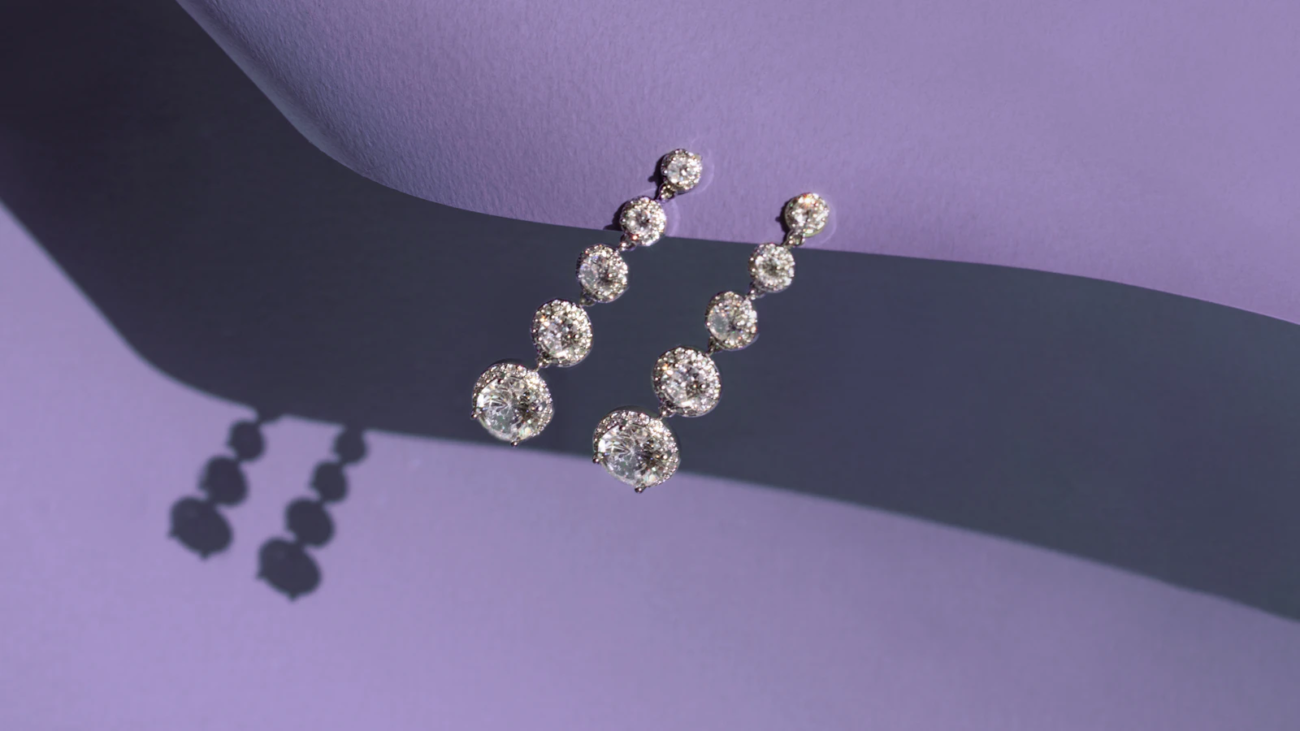
Diamond earring drop settings hold diamonds within designs that hang below the earlobe. The drop structure creates the length and movement, while the setting itself secures each diamond.
Prong and bezel settings can both appear in drop earrings. Shape and orientation influence how the diamond faces and moves.
The hanging component is separate from the setting itself. A drop may contain one or several settings, depending on diamond size, construction and intended movement.
For a broader comparison of silhouettes, see Stud vs. Drop Diamond Earrings.
How to Choose the Right Diamond Earring Setting
The best setting depends on appearance, fit and intended use.
Consider Appearance and Diamond Visibility
Open prong settings generally expose more of the diamond, while bezels create a stronger metal outline. Halo designs increase visual presence by surrounding the center stone with additional diamonds.
Think About Comfort and Everyday Wear
Consider setting height, profile, weight and fit. No setting is universally the most comfortable because fit varies with ear shape, diamond size and overall construction.
Consider Stone Protection and Maintenance
Secure construction matters for regular wear. Check retaining components periodically and clean and store earrings appropriately.
Find a Diamond Earring Style You'll Love
Frequently Asked Questions About Diamond Earring Settings
What are the most common types of diamond earring settings?
Common types include prong, bezel, martini, basket and halo. Prong and bezel describe how the stone is secured, while martini and basket describe supporting structures and halo describes an arrangement of surrounding diamonds.
Which diamond earring setting shows the most diamond?
Open prong settings generally leave more of the diamond exposed, although the visible result depends on the number of prongs and the overall construction.
Are bezel settings more protective than prong settings?
A bezel surrounds the diamond’s perimeter with metal, providing additional edge coverage. However, the security of either design depends on construction quality and condition.
What is the difference between martini and basket settings?
Martini settings have a tapered, cone-like profile, while basket settings use a broader supporting framework beneath the diamond. Their different structures affect how the earring sits and appears from the side.
What are diamond earring drop settings?
These are settings used to secure diamonds within earrings that hang below the earlobe. The setting holds the diamond, while the drop construction creates the length and movement.